What We Learned at GWA 2026: Why Preferred Office Network Is Betting on the Future of Flexible Workspace
09.22.2026
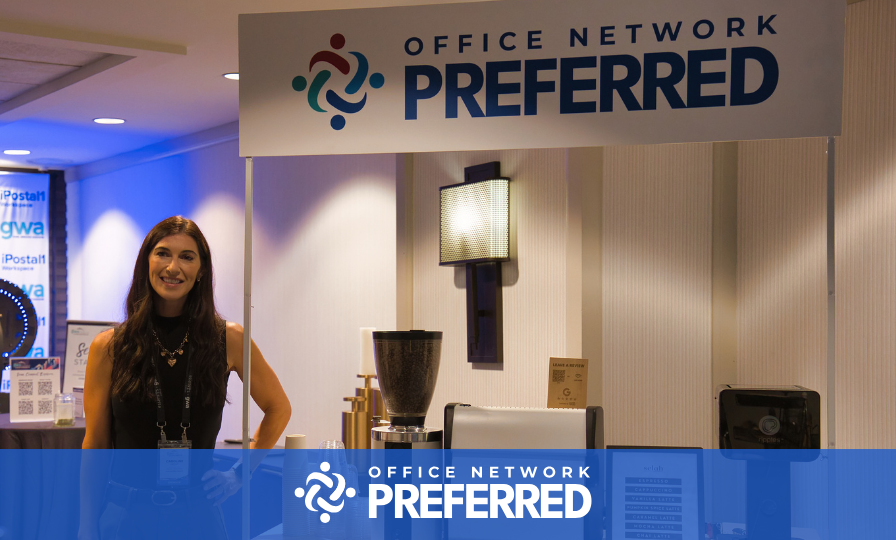
Every year, the flexible workspace industry’s operators, brokers, partners, and investors gather at the Global Workspace Association (GWA) annual conference to learn where the sector is headed. This year’s event took place September 1-4 in Denver, Colorado, and the entire Preferred Office Network team was on the ground to hear how commercial real estate leaders are shaping the next phase of flexible workspace.
Here’s what we brought back from GWA 2026, and how it shapes the way we serve enterprise clients evaluating flex office space.
The U.S. Flexible Workspace Market Is Still Underpenetrated
Industry data presented at the conference put the U.S. flex market at roughly 9,300+ locations across more than 4,300 operators, with the largest operators continuing to consolidate share. Yet flexible workspace still accounts for only about 2.5% of total U.S. office inventory, a not-so-subtle reminder that even as the category matures in dense markets, there’s substantial room to grow almost everywhere else. Markets like Central London are cited as “mature” at around 10% flex penetration, which gives real estate teams a useful benchmark for where their own markets may be headed, and the opportunities left to uncover.
The takeaway for enterprise occupiers: as flexible workspace expands into new markets, quality and service levels will rise to meet demand. High-quality flex space outside primary urban markets will keep increasing, giving enterprise users more options and the ability to build out their workforce closer to where talent lives. Operators are investing, building, and growing as more stakeholders lean into flex.
Why Enterprises Actually Choose Flexible Workspace
One of the most useful sessions reframed the buying motivations behind enterprise flex adoption. It’s rarely about amenities. The real drivers are speed to occupancy, avoiding capital expenditure, accommodating headcount that doesn’t fit a long lease cycle, and supporting a workforce that’s more mobile than it was five years ago. Security and data privacy were called out as outweighing conventional perks in enterprise decision-making, a sign that operators need to be having IT and compliance conversations, not just design conversations.
Just as important: flexible workspace was described as a bridge to market entry, not a final destination. For enterprises testing a new city or right-sizing after a lease expiration, flex is the on-ramp, and the landlord relationship behind that space matters more than any single transaction. Buildings with strong flex offerings are, unsurprisingly, better utilized, and can become a magnet for longer-term tenants who value the shared amenity spaces that flexible workspace provides.
How Enterprise Flex Buying Patterns Have Shifted
A session on enterprise sourcing patterns offered some numbers worth sitting with: the majority of dated space searches now happen within a week of need, and a large share of enterprise flex activity, reportedly over 70%, is occurring outside the top 10 U.S. cities. Enterprises are also working with a growing number of operators simultaneously rather than consolidating with one, and demand tends to peak midweek. Behind every client request, there’s a program in place that supports that client’s real estate strategy.
Our job at Preferred is to understand each client’s unique strategy and provide the right flexible workspace solution. We recognize there’s no one-size-fits-all approach, and we tailor our solutions accordingly. Through our curated network, clients can work with nearly any brand in the industry while enjoying the same standardized, flexible terms.
How AI Is Reshaping Flexible Workspace Operations and the Buying Cycle
The hottest topic of the conference centered on artificial intelligence. AI is being woven into the fabric of the industry faster than ever, and the companies adopting it in the right ways are helping push the boundaries of what’s possible. The consistent message from operators further along in AI adoption: not every workflow needs an agentic AI solution. Plenty of operational problems are better solved with a controlled, repeatable, deterministic process than with a tool that can produce a different answer each time. AI earns its place in marketing content production, customer research, and drafting, with a human still setting strategy and running quality control, but it isn’t a replacement for disciplined operations.
That distinction is one we take seriously. Enterprise clients don’t need their flex provider chasing every new tool; they need a partner who knows which processes should be automated, which should stay human, and why. Tools that remove friction from the search and transaction process are worth investing in, but we’ll always pride ourselves on a hospitality- and service-oriented approach.
Flexible workspace partners and operators who can help clients connect data points that translate into measurable value hold a real competitive advantage.
What This Means for Enterprise Flex Strategy
For enterprise teams evaluating flexible workspace as part of their real estate strategy, choosing the right flex space partner matters. The thought leaders at this year’s conference don’t just report on the industry: they’re helping build it.
That’s why Preferred Office Network shows up at GWA, and events like it, year after year. Staying close to where the data comes to life, and where the future of the industry is being discussed, is how we make sure the guidance we give enterprise clients is grounded in fact.
Preferred is also investing heavily in benchmark reporting built specifically for the flexible workspace industry, something that’s never been done successfully at scale. We’re leveraging our network of 300+ operator brands to aggregate data sets that help operators understand their markets, learn where to invest, and tell the story of the value flex brings to a market. It’s an exciting initiative that will ultimately come full circle, giving enterprise customers more of what they want, where they want it.
If you’re evaluating flexible workspace as part of your portfolio strategy and want to talk through what these market shifts mean for your specific footprint, we’d love to connect.
Related Posts
Follow Us @preferredofficenetwork
Industry Insights
Read the latest happenings at Preferred Office Network
and in the flexible office industry.
- What We Learned at GWA 2026: Why Preferred Office Network Is Betting on the Future of Flexible WorkspaceEvery year, the flexible workspace industry's operators, brokers, partners, and investors gather at the Global Workspace Association (GWA) annual conference to learn where the sector is headed. This year's event took place September 1-4 in Denver, Colorado, and the entire Preferred Office Network team was on the ground to hear how commercial real estate leaders are shaping the next phase of flexible workspace.Here's what we brought back from GWA [...]Read More
- Account Management Through the Lens of Hospitality: An Interview with Mehgan SimmelAs organizations continue to rethink their corporate workplace strategies, the role of an enterprise account manager has become increasingly important. Beyond simply finding office space, today's enterprise clients need a trusted partner who can simplify complex real estate portfolios, advocate on their behalf, and deliver flexible workspace solutions that evolve with their business.We sat down with Mehgan Simmel, Senior Manager of Enterprise Accounts at Preferred Office Network, to discuss [...]Read More
- Four Enterprise Companies, Four Flexible Workspace Strategies: One Trusted Office NetworkToday's workplace strategy goes far beyond deciding where a company has an office. Modern organizations need flexible workspace solutions that improve productivity, support employee well-being, reduce costs, and align with long-term business goals.At Preferred Office Network, we help enterprise organizations build scalable workplace strategies through a nationwide network of professional office providers. Whether a company is expanding into new markets, supporting remote employees, managing a distributed workforce, or simplifying [...]Read More
Stay Connected to the Future of Work
Join our mailing list and be the first to receive insights and updates on how Preferred is shaping flexible workspace worldwide.


